
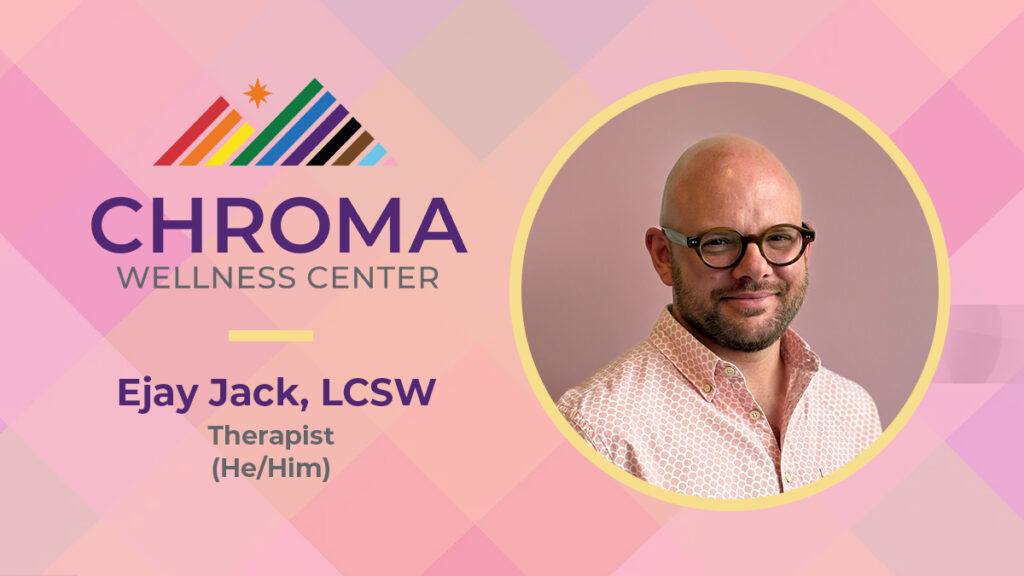
At Chroma Wellness, healing is rooted in understanding the whole person—mind, body,
identity, and lived experience. For therapist Ejay Jack, LCSW, one of the primary ways he supports LGBTQIA+ clients is through Internal Family Systems (IFS), a trauma-informed therapy model that helps people understand the different “parts” of themselves with compassion rather than judgment.
“Internal Family Systems is really about understanding our whole selves,” Ejay explains. “It’s about being able to identify these parts of ourselves, calm them, regulate them, and adapt so we can have more fruitful relationships and live the life we hope and want to live.
What Is Internal Family Systems (IFS)?
Despite its name, IFS is not about working with your family of origin directly. Instead, it views each person as having an internal system of parts—much like a family—each with its own role, motivation, and history. Some parts are protective, some reactive, and others carry deep wounds from earlier life experiences.
“The family part comes from family systems theory,” Ejay shares. “We all have different roles in families caretakers, disciplinarians, learners—and IFS applies that idea inward.”
Rather than trying to eliminate uncomfortable emotions like anger, shame, or fear, IFS helps clients get curious about why those parts exist and what they are trying to protect. This work aligns closely with trauma-informed therapy.
Why IFS Is Especially Helpful For LGBTQIA+ Clients
For many queer and trans individuals, early messages about gender, identity, love, and belonging can conflict deeply with who they truly are. Those internalized narratives often create protective or reactive parts—sometimes showing up as substance use, self-criticism, or emotional numbing.
“A part of someone may feel overwhelmingly judged,” Ejay explains. “Then another part lashes out, or another uses substances to numb the pain. When we understand why those parts developed, the behavior starts to make sense.”
This work often supports individuals navigating substance use and chemsex support alongside mental health care.
“I Bring My Whole Self. I’m Human First. And That Humanity Is What Allows Real Healing To Happen.”
“When One Or Two People Connect To Their Core Self—The Part That Is Calm, Compassionate, And Clear—It Spreads Through The Room.”
IFS offers LGBTQIA+ clients a framework that normalizes complexity rather than pathologizing it. “We’re complex people,” Ejay says. “And IFS really normalizes that—especially in the queer community.”
The Power Of Group Work At Chroma
Ejay facilitates groups at Chroma Wellness, where IFS becomes even more powerful through shared experience. When clients begin naming their parts out loud, something transformative happens.
“When someone says, ‘A part of me feels judged, and then I shut down,’ someone else in the group says, ‘Oh my gosh, I feel the same way,’” Ejay notes. “That shared understanding is incredibly healing.” Groups reduce isolation, build connection, and allow compassion to spread. “When one or two people connect to their core Self—the part that is calm, compassionate, and clear—it spreads through the room,” he explains. “There’s less judgment and more humanity.”
The Power Of Group Work At Chroma
IFS doesn’t just build insight—it builds practical skills. Clients learn how to recognize when a part is taking over and how to respond differently. “It’s about agency,” Ejay says. “An angry part doesn’t have to take over. You can say, ‘I have a part that’s really enraged right now, and I need space.’ That’s incredibly empowering.” This approach helps clients address depression, anxiety, shame, substance use, and internal critics with curiosity rather than fear—supporting long-term mental health and resilience within outpatient mental health care for LGBTQIA+ adults.
The Power Of Group Work At Chroma
As a trans masculine therapist, Ejay brings both professional expertise and lived experience into the room. “The therapeutic relationship is critical,” he shares. “I bring my whole self. I’m human first. And that humanity is what allows real healing to happen.”
At Chroma Wellness, IFS is more than a modality—it’s a way of honoring the full complexity of LGBTQIA+ lives and creating space for healing, connection, and self-compassion through Chroma’s trauma-informed, whole-person model of care.
About Chroma Wellness Center
Chroma Wellness Center provides affirming, trauma-informed outpatient care for LGBTQIA+ individuals and allies seeking healing from mental health and substance use challenges. Offering PHP and IOP levels of care, Chroma integrates evidence-based therapies such as DBT, CBT, EFT, and Somatic Experiencing with community connection and clinical expertise.