
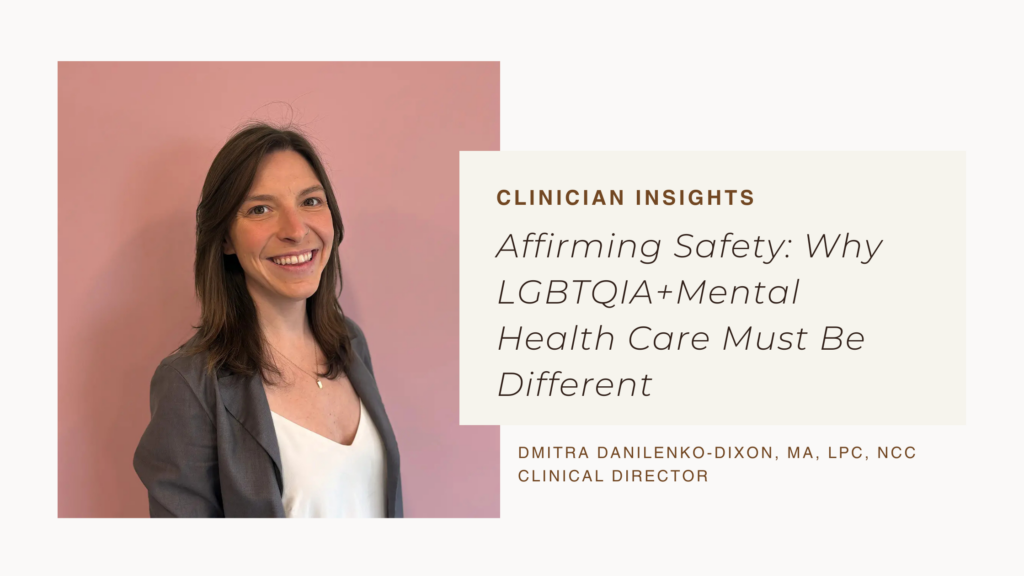
As a therapist and Clinical Director at Chroma Wellness Center, I believe that safety is the foundation of mental health care. For LGBTQIA+ individuals, safety is not simply about physical environment — it is about emotional, relational, and systemic safety. It is about walking into a space and not having to edit, defend, or explain who you are.
The data is clear. LGBTQIA+ individuals experience disproportionately high rates of trauma, discrimination, and minority stress. PTSD rates among LGBTQ+ individuals are estimated between 42–48%, compared to 4.7% in the general population. Nearly half of transgender adults report considering suicide in the last year. Substance use rates range from 20–30% in the LGBTQ+ community, often as a coping response to chronic identity-based stress.
These outcomes are not caused by queer identity — they are the result of sustained exposure to stigma, rejection, violence, and systemic marginalization.
MINORITY STRESS
Minority Stress Theory helps us understand this reality. Individuals with LGBTQIA+ identities experience daily stressors beyond typical life stress — including discrimination, internalized shame, hypervigilance, and concealment of identity.
When these stress responses become chronic and inflexible over time, they contribute to depression, anxiety, suicidality, and substance misuse. Traditional treatment models often fall short because they focus primarily on symptom reduction, without addressing the underlying wounds created by minority stress and cultural invalidation.
Chroma Wellness Center was founded in Denver in response to this gap in care. As Colorado’s LGBTQIA+ community continues to grow, affirming, trauma-informed outpatient services remain limited. Chroma was intentionally created as a dedicated space where queer and trans individuals can receive evidence-based mental health and substance use treatment rooted in affirmation, cultural humility, and belonging.
“SAFETY IS NOT A STATIC ACHIEVEMENT; IT IS A CONTINUOUS COMMITMENT.”
– Dmitra Danilenko-Dixon, MA, LPC (She/Her), Clinical Director
Our clinical model integrates LGBTQIA+-affirmative therapy with modalities such as CBT, DBT, ACT, EMDR, and somatic approaches. We normalize depression and anxiety as understandable responses to minority stress. We validate the impact of identity-based trauma. We empower clients to build regulation skills, self-acceptance, and authentic connection. Group therapy is structured to reduce isolation and strengthen community — shown to decrease minority stress and depressive symptoms.
As a white, lesbian, cisgender clinician, I also believe in practicing cultural humility — ongoing self-reflection, acknowledgment of power dynamics, and accountability in care.
Safety is not a static achievement; it is a continuous commitment.
Clients often share, “I’ve never felt so safe to just be me.” That statement captures our mission.
Healing begins in connection. At Chroma Wellness Center, affirming safety is not an enhancement to treatment — it is the foundation.
ABOUT CHROMA WELLNESS CENTER
Chroma Wellness Center provides affirming, trauma-informed outpatient care for LGBTQIA+ individuals and allies seeking healing from mental health and substance use challenges. Offering PHP and IOP levels of care, Chroma integrates evidence-based therapies such as DBT, CBT, EFT, and Somatic Experiencing with community connection and clinical expertise.