
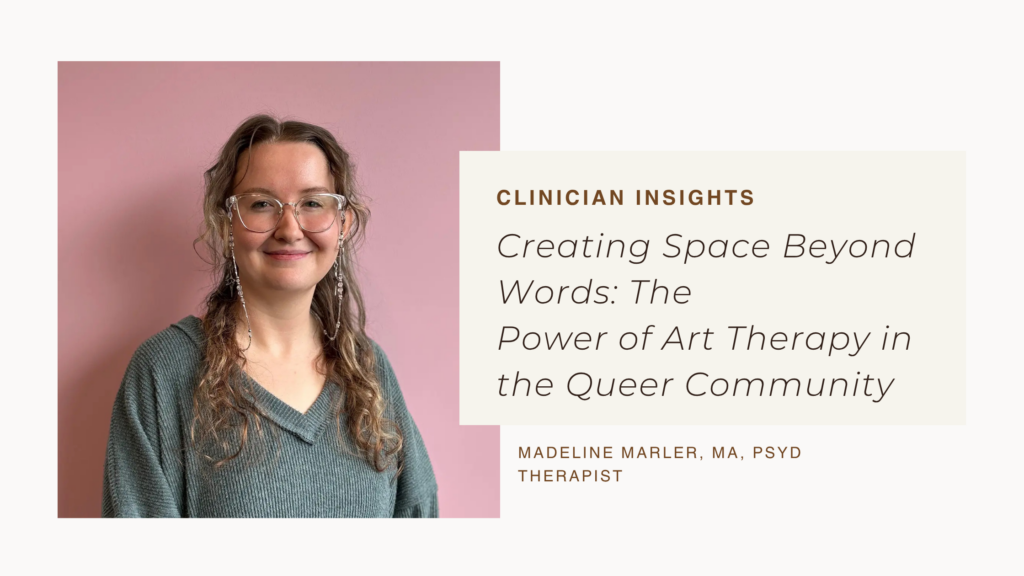
Art therapy offers a powerful and often underutilized pathway for healing—particularly for individuals navigating trauma and identity within the queer community. While traditional talk therapy remains a cornerstone of behavioral health treatment, it does not always access the full depth of human experience. For many, especially those with chronic or identity-based trauma, words alone can feel limiting.
According to therapist Madeline Marler, PsyD, trauma is not always stored in ways that can be easily verbalized. Instead, it may live in the body as sensations, images, or emotional imprints rather than a structured narrative.
“Trauma is often stored in ways that language can’t easily reach… art gives clients a nonverbal access point to emotions, memories, and experiences.”
This understanding shifts the therapeutic approach. Asking someone to immediately articulate their trauma can feel overwhelming or even re-traumatizing. Art therapy introduces an alternative—one that allows expression without requiring immediate verbal processing.
"How do you name something that feels so big, confusing, and painful? Art creates a different entry point."
Madeline Marler, MA, PsyD
Through creative expression, clients are able to externalize internal experiences. This creates a sense of distance and safety, allowing them to explore emotions before they are ready to name or claim them directly.
“Art allows clients to explore a feeling before they have to claim it verbally—it creates distance that can feel safer.”
For queer individuals, this approach is particularly meaningful. Many experience minority stress—the cumulative impact of navigating environments that may not affirm or reflect their identity. This often leads to masking, internalization, and difficulty expressing authentic experiences.
“There’s a chronic, cumulative weight of navigating a world that wasn’t built with your identity in mind.”
Within this context, creating a psychologically safe and identity-affirming therapeutic space becomes essential.
“Safety isn’t something we declare—it’s built through consistency, transparency, and small moments over time.”
Art therapy also supports nervous system regulation. The sensory and rhythmic aspects of creative work can help clients remain grounded while engaging with difficult emotions.
"Art-making can be very regulating… it's rhythmic, sensory, and gives the body something concrete to focus on."
Madeline Marler, MA, PsyD
Importantly, art therapy is not about artistic ability. It is about access—providing clients with another modality to explore healing, identity, and self-expression without pressure or expectation.
Marler emphasizes that healing is not linear. Growth often unfolds gradually, revisiting experiences in new ways over time.
“Healing isn’t linear—it’s more like a spiral, where we revisit the same things in new ways over time.”
Ultimately, art therapy creates space—space for expression, for identity exploration, and for healing beyond words. For many within the queer community, that space is not only therapeutic, but transformative.
About Chroma Wellness Center
Chroma Wellness Center provides affirming, trauma-informed outpatient care for LGBTQIA+ individuals and allies seeking healing from mental health and substance use challenges. Offering PHP and IOP levels of care, Chroma integrates evidence-based therapies such as DBT, CBT, EFT, and Somatic Experiencing with community connection and clinical expertise.
To learn more or schedule an assessment, visit www.chromawellness.com or call 720-410-5569.
.