Sexual activity can help reduce anxiety—and there’s real neuroscience behind it. During sex, the body releases a cascade of hormones and neurotransmitters, including oxytocin, endorphins, and dopamine, while simultaneously lowering cortisol, the hormone most associated with the stress response. The result is a measurable shift in mood, physical tension, and emotional state that many people experience as genuine relief.
That said, sex isn’t a treatment for anxiety, and the relationship between the two is more complicated than a simple cause-and-effect. If you’re navigating persistent anxiety, understanding what’s actually happening—and what the research does and doesn’t say—can help you make sense of your own experience. For those in need of structured support, affirming mental health treatment may be worth exploring.
Key Takeaways
- Sexual activity is associated with lower anxiety and depression scores, likely due to hormonal and neurochemical effects.
- The primary mechanisms are increased oxytocin, endorphins, and dopamine, alongside reduced cortisol.
- Solo sex carries similar physiological benefits as partnered sex—connection isn’t required for the neurochemical response.
- Chronic or high-baseline anxiety can also suppress libido and sexual function, creating a cycle that’s worth understanding.
- For LGBTQIA+ people, minority stress adds a layer of context that mainstream research often misses—safe, affirming relationships and care environments matter significantly.
What’s Actually Happening in Your Body During Sex?
The anxiety-reducing effects of sex aren’t placebo—they’re rooted in real biological processes. A few key mechanisms help explain why.
It boosts feel-good chemicals
During sexual activity and orgasm, the brain releases dopamine—a brain chemical associated with pleasure and reward—alongside endorphins, the same chemicals released during exercise. Together, these can temporarily lift mood, reduce physical tension, and counteract the mental loop of anxious thinking. [2]
It releases oxytocin
Physical closeness and orgasm both trigger the release of oxytocin, sometimes called the “bonding hormone.” Oxytocin plays a significant role in stress regulation and mental health—contributing to feelings of calm, trust, and emotional safety. [1]
It lowers stress hormones
Sex also appears to reduce levels of cortisol—the hormone your body produces in response to perceived threat. Research published in the Journal of Sexual Medicine found that the majority of women showed a measurable decrease in cortisol during sexual arousal, consistent with the idea that the body’s stress response tends to quiet down during sex. [3] Chronically elevated cortisol is hard on the nervous system—it’s associated with sleep disruption, irritability, difficulty concentrating, and heightened anxiety. Sexual activity offers one way to bring those levels down.
These effects aren’t exclusive to partnered sex. Solo sexual activity triggers many of the same hormonal responses, [4] and research suggests many people actively use it as a reliable coping strategy for stress and low mood. [5]
Does the Research Actually Support Sex As an Anti-Anxiety Tool?
The evidence is meaningful—though worth interpreting carefully. A large-scale study published in the Journal of Sexual Medicine followed nearly 7,000 people during the COVID-19 lockdown—a period of unusually high, well-documented stress—and compared mental and sexual health outcomes between those who remained sexually active and those who did not. [6] Here’s what they found.
Sexually active people had significantly lower anxiety and depression scores
People who stayed sexually active during lockdown scored meaningfully lower on validated measures of both anxiety and depression compared to those who were not sexually active during the same period.
Stopping sexual activity increased the risk of anxiety and depression
People who had been sexually active before lockdown but stopped during it showed a notably higher risk of developing both anxiety and depression—suggesting that the disruption of sexual activity, not just its absence, matters.
Sexual activity also appeared protective for relationship quality
Those who remained sexually active reported better scores on measures of relationship cohesion and satisfaction, pointing to a broader connection between sexual well-being, mental health, and relational health.
Sex isn’t a cure for anxiety
Sexually active participants during COVID were also more likely to be living with their partners, which makes it difficult to fully separate the effect of sex itself from the effects of companionship, intimacy, and shared routine. The research suggests that sexual wellbeing and mental health are genuinely connected, but disruption to one affects the other, and sex alone isn’t a substitute for addressing anxiety or mental health directly.
Does It Matter Whether You Have a Partner?
The short answer is: not as much as you might think, biologically. Many of the same brain chemicals—dopamine, endorphins, and oxytocin—are released during solo sex as during partnered sex, [4] and research suggests many people actively use solo sexual activity as a reliable way to cope with stress and low mood. [5]
Biologically, no. Solo sex triggers many of the same responses
The neurochemical effects of orgasm don’t require another person. Whether solo or partnered, the brain releases the same mood-lifting, stress-reducing chemicals. For anxiety relief specifically, the physical act itself does a lot of the work.
Relationally, yes. Emotional safety adds something extra
People who were sexually active with partners showed better scores on measures of relationship closeness and satisfaction—and that sense of connection appears to act as an additional buffer against anxiety. [6] Feeling emotionally safe, physically close, and mutually supported during stressful periods adds something beyond the neurochemical baseline.
For queer and trans people, affirming community makes a difference
Chosen family, affirming partnerships, and communities that reflect your identity aren’t just emotionally valuable—research suggests they play a meaningful role in the health and wellbeing of queer and transgender individuals, particularly when biological family is absent or unsupportive. [7] The absence of that kind of affirmation can compound anxiety in ways that individual coping strategies alone may not address.
Why Does Anxiety Sometimes Impact Sex Drive?
Anxiety and sexual desire don’t always coexist easily—and the relationship runs in both directions. When you’re anxious, your nervous system is in threat-detection mode. That state is essentially the opposite of what the body needs for arousal and pleasure.
Your nervous system is in “fight or flight”
Chronic anxiety activates what’s often called the “fight or flight” response—a state of high alert that prioritizes survival over everything else, including intimacy. Arousal requires the opposite: a sense of safety, presence, and ease. [3]
Anxiety can show up in the body in specific ways
When anxiety is high, it can affect sexual desire and function in ways that feel confusing or frustrating. Some common experiences include:
- Lower interest in sex or difficulty getting in the mood
- Trouble with arousal or reaching orgasm
- Avoiding sex altogether
- Sex itself is becoming a source of anxiety
For some people—particularly those with a history of trauma, body image concerns, or experiences of shame—this last one is especially common. These experiences are disproportionately prevalent among LGBTQIA+ people navigating minority stress.
When anxiety and sex create a cycle
Anxiety reduces interest in sex. Less sexual activity may contribute to a lower mood. Lower mood can worsen anxiety. Recognizing this pattern isn’t a reason for self-judgment—it’s useful information that often points toward a need for support that goes deeper than the sexual symptoms alone.
Sex And Anxiety in the LGBTQIA+ Community
The biology of how sex affects anxiety is the same across identities. But lived experience shapes everything around it—and for many queer and trans individuals, that context adds real complexity.
Queerness and sexuality are deeply connected
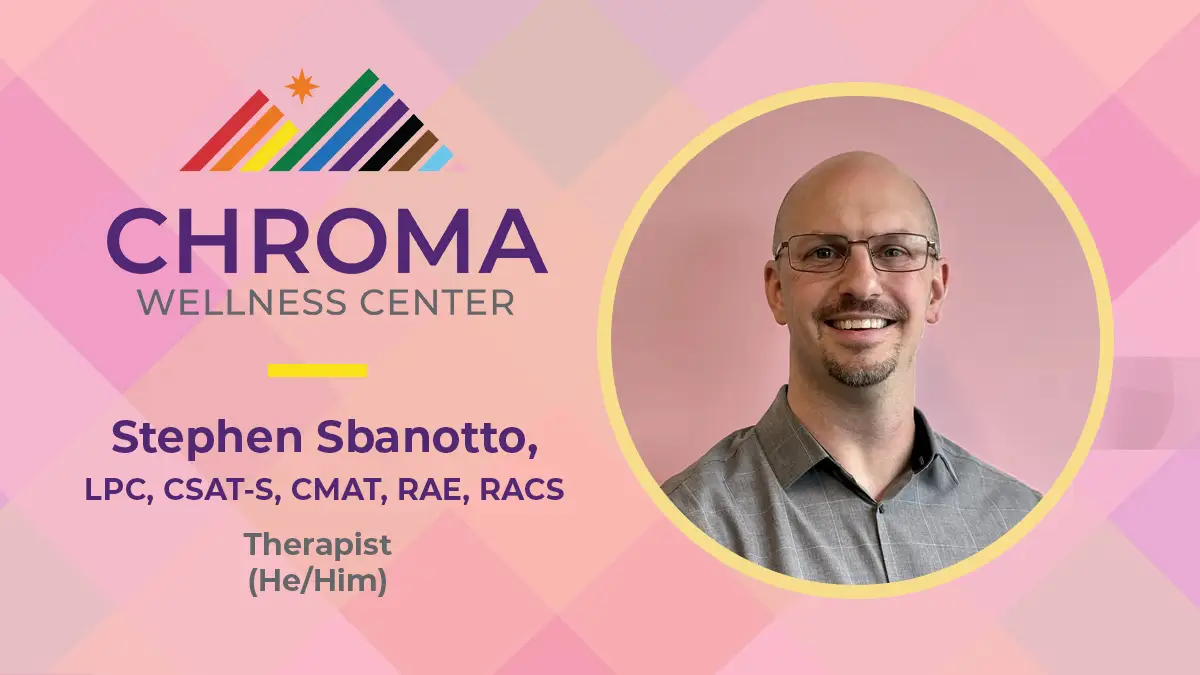
“Queerness and sexuality are deeply interlinked,” says Stephen Sbanotto, LPC, CSAT, a clinician specializing in sexuality, trauma, and addiction who facilitates Chroma’s sexuality and intimacy group. “Sexuality and gender expression—how I see myself, who I love, how I connect—these are essential parts of identity.”
For queer and trans people, conversations about sex and anxiety rarely exist in isolation from identity.
Minority stress raises baseline anxiety
That intersection matters clinically. Minority stress—the chronic, elevated stress that comes from navigating discrimination, identity concealment, unsupportive families, or healthcare environments that don’t feel safe—raises baseline anxiety in ways that make the sex-anxiety relationship more complex for many queer and trans people. Research consistently shows that LGBTQIA+ individuals experience higher rates of anxiety and depression than the general population, driven largely by external stressors rather than anything inherent to identity. [8]
Trauma and stress aren’t strictly in the past
“So many individuals within the queer community experience rejection, bullying, or violence across their lifespan. We can’t assume those experiences are confined to youth. For many, those challenges continue throughout life.” — Stephen Sbanotto, LPC, CSAT
Recognizing that anxiety has ongoing external causes—not just internal ones—is often the first step toward finding support that actually fits.
When Is Anxiety More Than a Mood?
Sex can be one helpful piece of a broader mental health picture, but it’s not a substitute for treatment when anxiety is persistent, severe, or getting in the way of daily life. Lifestyle factors work best alongside treatment, not instead of it.
Signs it may be time to seek support
If anxiety is regularly affecting any of the following, it’s worth talking to someone:
- Sleep quality or ability to rest
- Relationships or intimacy
- Work, focus, or daily functioning
- Your sense of safety or ability to be present
These aren’t signs of weakness. They’re signals worth paying attention to.

Your Healing Journey Starts Here
If anxiety is affecting your daily life, you don’t have to figure it out alone. Structured outpatient programs like PHP and IOP offer evidence-based anxiety treatment without requiring inpatient care or hospitalization. For queer and trans individuals who’ve had difficult experiences in traditional healthcare settings, finding a program built specifically for your community can make all the difference.
If you’re exploring options for anxiety or sex and intimacy support, we’re here. Reach out to us at 720-410-5569 or verify your insurance coverage. No pressure, no judgment, just a conversation when you’re ready.
FAQs
What can a lack of sex do to a person?
For some people, reduced sexual activity has no notable impact. For others, it may coincide with lower mood, increased stress, or a sense of disconnection, particularly if the change reflects a broader shift in intimacy or relationship quality. There’s no universal threshold; what matters most is whether your needs are being met.
What does a lack of intimacy do to the brain?
Intimacy supports the production of oxytocin, a hormone associated with calm, safety, and emotional connection. When physical or emotional closeness is absent for extended periods, some people experience elevated stress, increased anxiety, or a deeper sense of isolation. Intimacy takes many forms. Partnership is not the only pathway to these benefits.
Is daily sex good for mental health?
More isn’t necessarily better. Research suggests that quality, consent, and genuine desire matter more than frequency. Pressure around how often you’re having sex can itself become a source of anxiety. The right amount is whatever feels good and is freely chosen for everyone involved.
How long should couples go without intimacy?
There’s no clinical benchmark for “too long.” Fluctuations in sexual frequency are normal and happen for many reasons—stress, health changes, life transitions, shifting desire. What matters more than any timeline is whether everyone involved feels heard and connected.
Can solo sex have the same mental health benefits as partnered sex?
For the neurochemical effects, yes. Orgasm triggers the release of oxytocin, endorphins, and dopamine regardless of whether a partner is involved. Solo sex is a legitimate, healthy part of sexuality across relationship structures and orientations, and a valid pathway to stress relief and body connection.
When does anxiety around sex become something to address in therapy?
When anxiety related to sex—avoidance, shame, performance anxiety, or distress around your body or identity—is consistently interfering with your wellbeing or relationships, it’s worth bringing into a therapeutic space. This is especially true if it has roots in trauma, discrimination, or internalized shame. Affirming, trauma-informed care can help you work through these layers without judgment.