Attachment disorder usually means Reactive Attachment Disorder (RAD), a childhood diagnosis marked by a consistent pattern of emotionally withdrawn behavior toward caregivers. It’s rooted in a history of extreme early neglect or inconsistent caregiving [1]. Adults aren’t formally diagnosed with it.
If you’re noticing attachment-related struggles in yourself or someone you care about as an adult, trauma-focused treatment can help. Adult attachment difficulties can significantly impact relationships, but they’re treatable, even without a childhood diagnosis.
Key Takeaways (TL;DR)
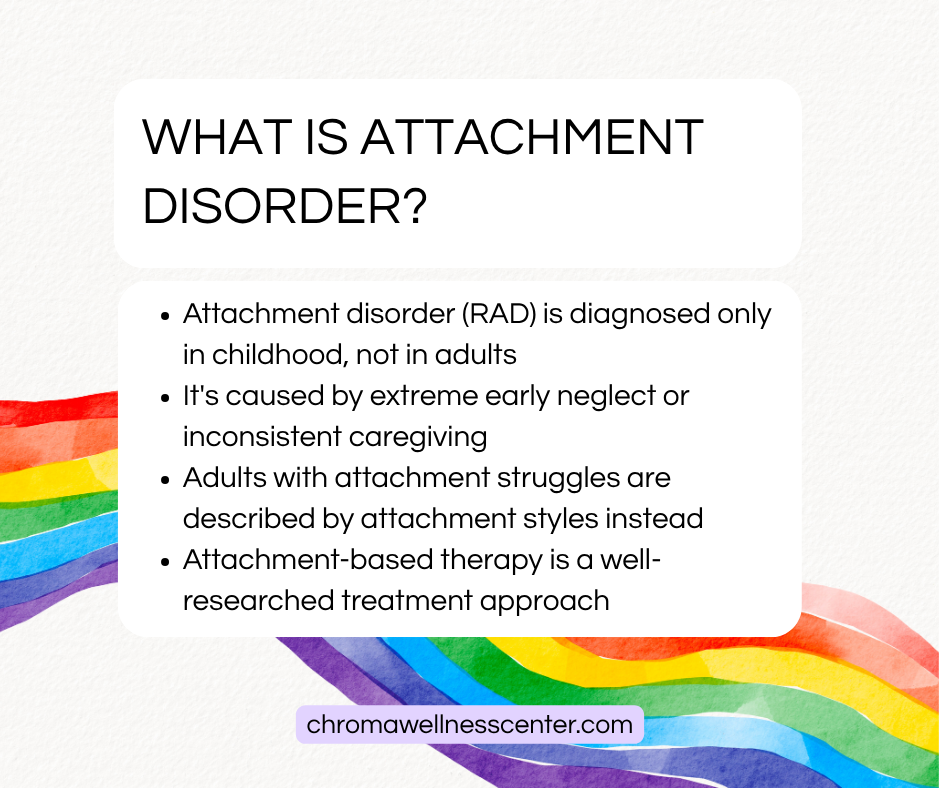
- Attachment disorder (RAD) is a childhood diagnosis rooted in extreme early neglect or inconsistent caregiving.
- It isn’t diagnosed in adults. Adult struggles with trust and closeness are usually understood through attachment styles instead.
- Common attachment styles include secure, anxious, avoidant, and disorganized.
- Insecure attachment patterns are linked to a higher risk of personality disorders and relationship difficulties later in life.
- Attachment-based therapy is one of the most researched approaches for treating attachment-related struggles in both children and adults.
What Is Attachment Disorder?
Reactive Attachment Disorder is a chronic pattern of being emotionally withdrawn and inhibited. Kids with RAD rarely seek or respond to comfort, even when they’re distressed. They also show limited positive emotion and can react with unexplained fear, sadness, or irritability during ordinary, nonthreatening moments [1].
RAD develops from a documented history of insufficient care. That includes severe neglect, frequent changes in caregivers, or growing up in a setting that made it hard to form a stable bond with anyone [1]. Estimates suggest RAD affects roughly 1% to 2% of children, though it’s difficult to assess with precision [1].
Is Attachment Disorder Diagnosed in Adults?
No. The diagnostic criteria for RAD require symptoms to appear before age 5, so clinicians don’t diagnose it in adults [1].
That doesn’t mean early attachment disruption stops mattering once someone grows up. Researchers and clinicians describe how those early experiences show up later through attachment styles rather than a formal disorder. In the general adult population, roughly 58% show a secure attachment style. The rest fall into avoidant (23%) or anxious (19%) patterns [3].
If you grew up without consistent, responsive caregiving, an insecure attachment style is usually the more accurate way to understand what you’re experiencing now. Not a diagnosis.
What Do Insecure Attachment Styles Look Like in Adults?
Insecure attachment generally falls into a few recognizable patterns.
- Anxious/preoccupied: hypersensitivity to rejection, along with a strong pull toward seeking closeness, reassurance, and attention from others [3].
- Avoidant/dismissing: discomfort with closeness, a tendency toward social isolation, and a habit of handling stress alone rather than reaching out [3].
- Disorganized/unresolved: difficulty staying regulated under stress, often alongside a history of unresolved trauma or loss [3].
These patterns aren’t character flaws. They made sense given someone’s early relationships, even when they cause friction in relationships now.
Can Attachment Patterns Change Over Time?
Yes. The research describes the change as modest and gradual rather than automatic. Attachment security can shift in response to major life stress, new relationships, or psychotherapy. Researchers now treat this kind of change as a normal part of development, not a failure of stability [4].
This matters whether you’re questioning your own patterns or wondering about someone close to you. An insecure attachment style formed in childhood isn’t a fixed sentence. It’s a starting point, and it can shift with the right support and relationships.
How Are Attachment Issues Treated?
For children, the strongest outcomes come from combining relationship-building with structured behavioral approaches rather than addressing either alone [2].
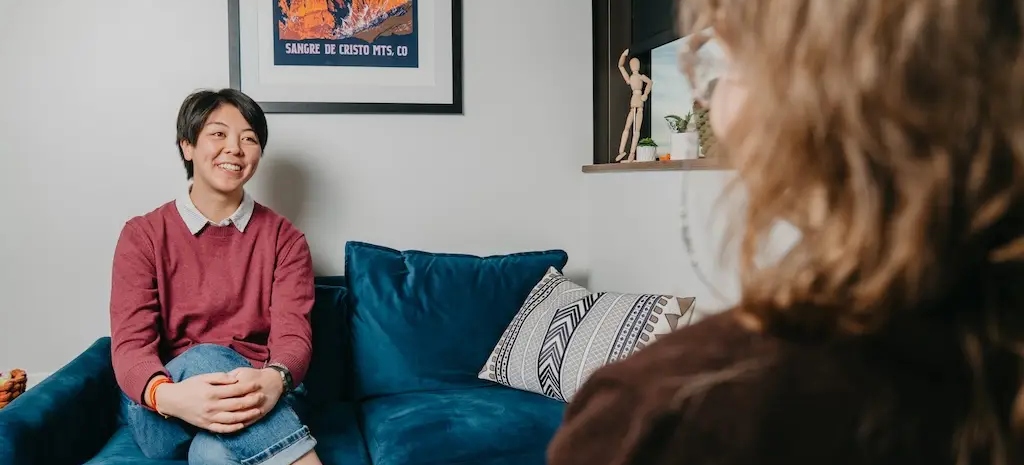
For adults, attachment-focused therapies build a stable, trusting relationship with a therapist as the foundation for change. Mentalization-based treatment, transference-focused psychotherapy, and schema-focused therapy were developed specifically around insecure attachment and its connection to personality and relationship difficulties [3]. Attachment-based therapy more broadly helps people build the kind of secure, reflective relationship in adulthood they may not have had access to earlier in life.
How Chroma Wellness Can Help
Attachment-related struggles show up differently for everyone. Difficulty trusting others, fear of closeness, trouble regulating emotions in relationships. Whatever form it takes, you don’t have to work through it without support.
Chroma Wellness offers Attachment-Based Therapy as part of our LGBTQIA+-affirming Partial Hospitalization Program (PHP) and Intensive Outpatient Program (IOP) in Denver, alongside trauma-informed individual and group therapy. Our team is built specifically to support the LGBTQIA+ community through the relational patterns that often trace back to childhood.
Call 720-410-5569 or let our team verify your insurance to get started.
FAQs
What are the symptoms of attachment disorder?
In children, symptoms include being emotionally withdrawn, rarely seeking comfort, limited positive emotion, and unexplained fear, sadness, or irritability during ordinary interactions.
What are the different types of attachment disorders?
Reactive Attachment Disorder is the formal childhood diagnosis. In adults, insecure attachment is described through styles instead, anxious/preoccupied, avoidant/dismissing, and disorganized/unresolved.
How do you treat attachment issues?
Children benefit most from combined relationship-building and behavioral approaches, while adults are typically treated with attachment-focused psychotherapies like mentalization-based treatment or schema-focused therapy.
What are attachment issues in psychology?
In psychology, attachment issues generally refer to insecure patterns of relating to others that developed from inconsistent or unreliable early caregiving, affecting trust, closeness, and emotional regulation.
Is attachment disorder the same as an attachment style?
No. Attachment disorder (RAD) is a specific childhood diagnosis, while attachment styles describe common patterns of relating that anyone, including adults, can have without meeting criteria for a disorder.
Sources
Ellis, E., Yilanli, M., & Saadabadi, A. (2023). Reactive attachment disorder. In StatPearls. StatPearls Publishing.
Hutchings, J., Williams, M. E., & Leijten, P. (2023). Attachment, behavior problems and interventions. Frontiers in Child and Adolescent Psychiatry, 2, Article 1156407.
Lorenzini, N., & Fonagy, P. (2013). Attachment and personality disorders: A short review. FOCUS, 11(2), 155–166.
Thompson, R. A., Simpson, J. A., & Berlin, L. J. (2022). Taking perspective on attachment theory and research: Nine fundamental questions. Attachment & Human Development, 24(5), 543–560.